What makes it special
The engineering still isn't fully understood
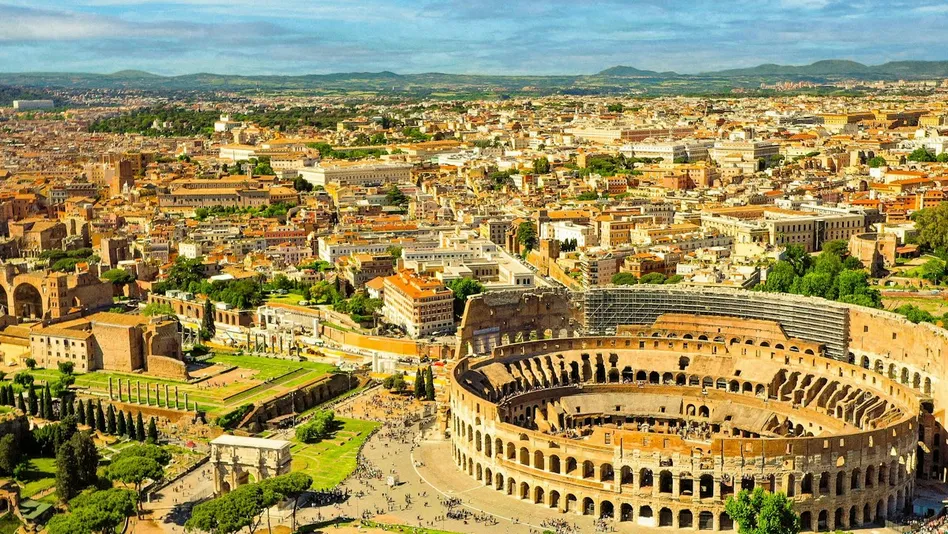
The Romans built a structure that has outlasted virtually everything else from their era, in an earthquake zone, with technology we're still reverse-engineering today. It was built in just eight years using a complex system of vaulted arches and concrete.
It shaped how we build today
The Colosseum's elliptical design and numbered entry system - 80 arched entrances that could empty 80,000 people in minutes - is the direct ancestor of every modern stadium on earth.
The subterranean hypogeum (The "Backstage")
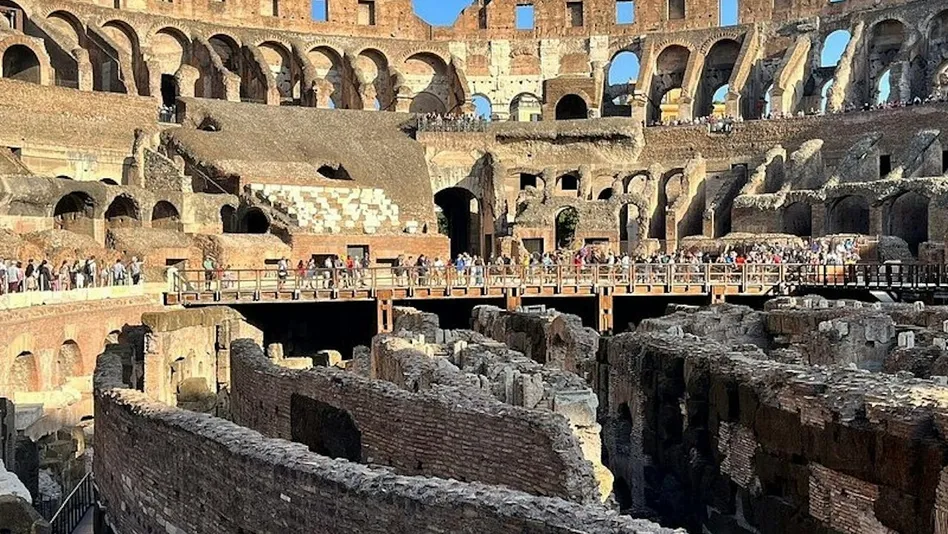
Recent restorations have opened up the Hypogeum, the subterranean network of tunnels and cages. Walking through where gladiators prepared and wild animals were kept in the dark before being hoisted to the arena floor via manual elevators is a visceral, slightly eerie experience that brings the history to life.
The spectacle of survival in ancient times
Standing on the reconstructed arena floor helps you grasp the sheer scale of the games. Beyond the gladiator fights, the Romans actually flooded the arena for mock naval battles (naumachiae) in the early years. Imagine "sea battles" here, in the heart of a landlocked city!
Must see highlights

The Arena Floor
Where the gladiatorial games in the ancient times actually happened! Standing on the reconstructed floor, with the hypogeum open below you, is the closest the site gets to experience what it must have felt like centuries ago. Make sure to book the ticket for this separately.
The Hypogeum
The underground network of tunnels and chambers beneath the arena floor. Gladiators waited here. Animals were caged here. Elaborate pulley systems lifted both into the light above. It's the part of the Colosseum that photographs least and impresses most.
The Upper Tiers
Most visitors stay at the lower levels, but you don't want to miss heading up to the upper tiers. From here, you'll be able to take in the full geometry of the arena in one view, and a sightline over Rome that hasn't changed in centuries.
The North and South Arches
Of the 80 original arched entrances, these remain the most intact. Look closely at the stonework, and you will still be able to see the holes where metal clamps once held the marble facing that the medieval city stripped for building material.
Did you know
Gladiator (2000)
Directed by Ridley Scott, the cult classic Gladiator featured a digitally reconstructed Colosseum for epic battle sequences and won 5 Academy Awards.
Roman Holiday (1953)
A princess escapes her royal duties for a single day in Rome, and a journalist follows. Audrey Hepburn and Gregory Peck's whirlwind tour through the city's landmarks -the Colosseum among them - turned Roman Holiday into one of cinema's great love letters to Rome, and to the ruins that define it.
Monument to Human Rights
Since 1999, the Colosseum is lit in gold for 48 hours whenever a death sentence anywhere in the world is commuted. A moment of poetic justice, wherein a Roman killing ground turns beacon against capital punishment.
Charles Dickens
Dickens visited the Colosseum in 1846 and was so struck by its beauty in the moonlight that he wrote about the experience in Pictures from Italy, describing the ruin as one of the most overwhelming sights he had ever encountered.
Johann Wolfgang von Goethe
Goethe visited during his Italian Journey and wrote about the Colosseum with an almost spiritual awe, calling it unlike anything the modern world could produce: a structure that made everything else feel small.